

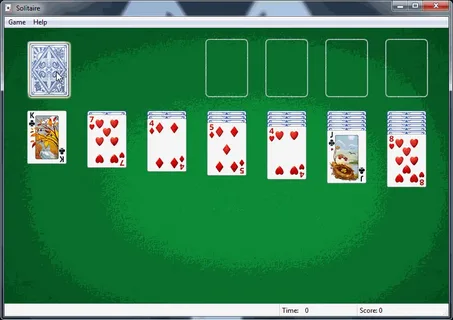
College students juggle a demanding balance of coursework, social obligations, and personal goals. Between early morning classes and late-night study sessions, it’s no surprise that brief, mentally refreshing breaks become essential. While some might reach for their phones to scroll through social media or dive into multiplayer video games, internet solitaire offers a uniquely effective way to recharge the brain. This simple card game is more than just nostalgia or a time filler—it’s a strategic tool that can enhance mental clarity, restore focus, and provide the perfect pause during intense academic routines.
A Mental Reset Without Overstimulation
One of the reasons internet solitaire remains an ideal study break game is its calming simplicity. The game doesn’t bombard the player with rapid motion graphics, loud audio cues, or constant notifications. Unlike fast-paced video games or scrolling through apps that keep the mind in a hyper-stimulated state, solitaire provides a sense of stillness. The goal is straightforward: organize cards into a specific order by suit and rank. There’s no chaos, no distractions, and no emotional highs or lows. Just a quiet rhythm that encourages focus without pushing the brain into overdrive.
This is critical during study breaks. A good break isn’t about zoning out completely or engaging in something equally exhausting—it’s about shifting cognitive gears. Internet solitaire allows students to step away from textbook-heavy tasks while still keeping their minds lightly engaged. The pattern recognition and planning skills involved in playing help the brain stay active, but not overwhelmed. This level of mental engagement creates a soft reset, preparing students to return to their studies with a clearer head.
Furthermore, since the game is so familiar to many, there’s no learning curve. A student doesn’t have to figure out controls, tutorials, or complicated rules. The ease of entry means they can start and finish a game within a short window of time. Five to ten minutes with internet solitaire can serve the same function as a brisk walk—just for the mind.
Portable, Accessible, and Unintrusive
Another reason internet solitaire remains relevant in the lives of busy college students is its accessibility. No special equipment is needed. Whether it’s played on a laptop between classes or during a quick break in the dorm, it loads easily on nearly any device with a browser. Most versions of the game don’t require downloads or sign-ups. For students who are constantly on the move, the ability to play without installation or distraction is invaluable.
Many college campuses offer intermittent Wi-Fi, especially in crowded study areas. Unlike online multiplayer games that demand stable internet connections and high data usage, internet solitaire can be played smoothly even with minimal connectivity. This makes it an excellent choice during those moments when other forms of entertainment simply won’t work.
Moreover, because the game is single-player and non-competitive, students don’t feel social pressure to win or keep up. There are no leaderboards flashing on screen or group chats pinging mid-game. It’s just the player, the deck, and the challenge of organizing chaos into order. This solitude becomes an advantage—it creates a mental bubble where a student can relax without noise from the outside world.
Even better, it’s inconspicuous. In a library or quiet study area, internet solitaire doesn’t disturb others. There are no explosive soundtracks or controller clicks. It can be enjoyed quietly, perhaps with headphones or even muted entirely, without drawing attention. That makes it a respectful way to enjoy a break while staying immersed in a focused environment.
Reinforcing Useful Cognitive Skills
While it may appear to be a simple game of chance, internet solitaire strengthens a surprising number of skills that support academic success. Decision-making, pattern recognition, forward planning, and adaptability are all at play during even a single round. Each move matters, and thoughtful consideration is rewarded.
In contrast to mindless scrolling or passive video watching, solitaire requires students to evaluate their options with every turn of the card. Should a red five be placed on a black six, or would it be smarter to wait and see what’s hidden beneath the next pile? These constant, low-pressure choices mimic the kind of critical thinking needed for effective studying and exam preparation.
Playing internet solitaire also sharpens memory. A player begins to remember which cards have been played and which stacks hold valuable pieces of the puzzle. That mental cataloging process closely resembles techniques students use in retaining lecture material or navigating dense reading assignments. While the stakes are certainly lower in a game, the mental muscles being exercised are the same.
Additionally, the game has a natural stopping point. This is an often-overlooked benefit. Unlike social media feeds that never end or multiplayer games that can drag on indefinitely, a solitaire session typically wraps up in five to ten minutes. Whether the game is won or not, the sense of closure helps the brain reset and transition back into study mode. It also reduces the risk of a short break becoming a lost hour of procrastination.
Why Internet Solitaire Still Beats Modern Distractions
The digital world is full of distractions, many of which promise short-term enjoyment but provide little in the way of true mental rest. Video platforms, for instance, use recommendation algorithms to encourage endless viewing, which can result in cognitive fatigue rather than relief. Fast-paced mobile games often rely on flashy visuals and constant interaction, tricking the brain into a state of alertness that isn’t restorative.
Internet solitaire avoids these traps. It doesn’t pressure users with dopamine-driven loops or reward systems based on continuous play. There’s no in-game currency to earn, no daily rewards to chase, and no friends list to manage. What it offers instead is predictability and calm. It invites the player to engage in a solitary, thoughtful task that can be completed in a short amount of time and then left behind without consequence.
Even aesthetically, the interface of most internet solitaire platforms is visually clean and free from clutter. For students bombarded by notifications and digital chatter throughout their day, this simplicity is refreshing. It reflects the kind of minimalist mental state that many aspire to during meditation or mindfulness exercises—but in the form of a nostalgic game from their childhood.
Internet solitaire also brings a subtle comfort factor. For many college students, especially those far from home or experiencing stress for the first time, the game carries memories of earlier years. That nostalgia, paired with its easygoing nature, can reduce anxiety and restore a sense of control. In a world that often feels fast, chaotic, and demanding, internet solitaire gives the player a chance to slow down and be fully present.